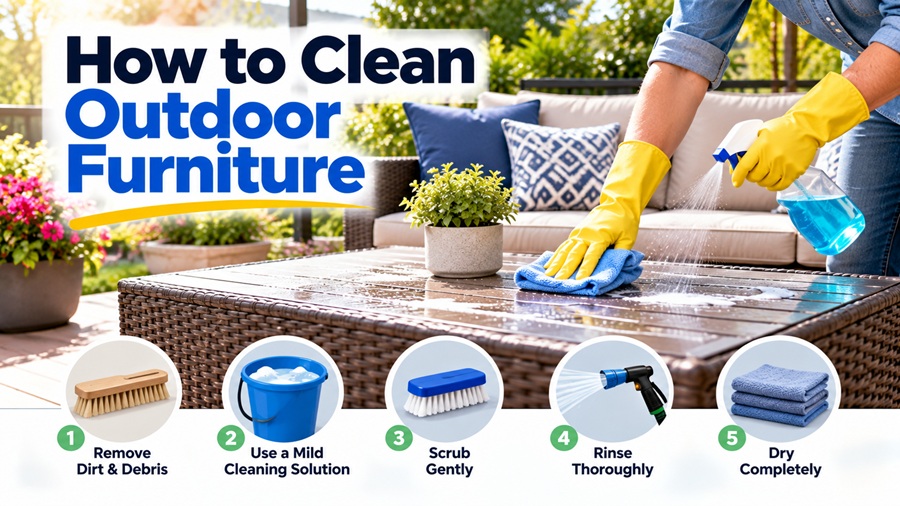
To clean most outdoor furniture, mix a few drops of mild dish soap into a bucket of warm water, scrub the surface with a soft brush or sponge, rinse thoroughly with a garden hose and let everything dry completely in the sun. This simple routine works for plastic, resin, aluminum, wicker and most fabrics.
The details change depending on material. Wood may need oiling or sealing, metal may need rust treatment and cushions with mildew need a stronger cleaning solution. Matching the method to the material is what keeps furniture looking good instead of slowly wearing it out.
Outdoor Furniture Cleaning at a Glance
| Material | Basic Cleaner | Extra Care |
| Plastic and resin | Dish soap and water | Baking soda paste for stains |
| All-weather wicker | Dish soap and water, soft brush | Avoid high pressure washing |
| Teak and hardwoods | Mild soap or teak cleaner | Light sanding, optional oil or sealer |
| Aluminum | Dish soap and water | Non-abrasive cleaner for oxidation |
| Wrought iron and steel | Dish soap and water | Remove rust, touch up paint |
| Glass tabletops | Glass cleaner or vinegar mix | Clean frame separately |
| Cushions and fabric | Dish soap or fabric-safe cleaner | Diluted bleach only if fabric allows |
| How often | Light clean monthly, deep clean at start and end of season |
What You Will Need
Most outdoor furniture cleaning uses basic supplies you probably already have.
| Supply | Use |
| Bucket | Mixing cleaning solution |
| Mild dish soap | All-purpose cleaning |
| Soft brush and sponges | Scrubbing without scratching |
| Garden hose | Rinsing |
| Microfiber cloths | Drying and polishing |
| White vinegar | Mildew, hard water spots, glass |
| Baking soda | Gentle scrubbing for stains |
| Old toothbrush | Corners, joints and wicker weaves |
| Rubber gloves | Protecting hands from stronger cleaners |
Before you start, check any care tags or manufacturer instructions. Some finishes and fabrics have specific requirements, and following them can protect your warranty.
How to Clean Plastic and Resin Furniture
Plastic chairs and resin sets are the easiest to clean, but they can stain and discolor over time.
Brush off loose dirt and leaves first. Mix warm water with a squirt of dish soap and scrub every surface, paying attention to armrests where hands leave oils.
For stubborn stains, make a paste of baking soda and water and rub it gently over the area. Rinse well with the hose and let the furniture air dry.
White plastic that has turned gray or yellow may need a stronger cleaner. Products made specifically for outdoor plastic or a diluted bleach solution can help, but test a small hidden spot first and rinse thoroughly. Never mix bleach with vinegar, ammonia or other cleaners.
Avoid abrasive scrubbers. They create tiny scratches that trap dirt and make plastic look dull faster.
How to Clean Wicker Furniture
Wicker has lots of nooks where dust and pollen collect. Most modern outdoor wicker is synthetic resin, which is far more forgiving than natural rattan.
Start by vacuuming with a brush attachment to pull dust out of the weave. Then scrub with soapy water using a soft brush, working along the weave rather than against it. An old toothbrush helps with tight corners.
Rinse with a gentle hose spray. High-pressure washing can loosen or fray the strands, so avoid it.
Let wicker dry fully in the sun before putting cushions back on. Trapped moisture can encourage mildew.
Natural wicker should stay mostly dry. Clean it with a damp cloth rather than soaking it.
How to Clean Teak and Other Wood Furniture
Wood needs a gentler touch and a bit more attention.
For regular cleaning, wipe with mild soapy water and a soft brush, then rinse lightly and let it dry.
For deeper cleaning of teak, use a dedicated teak cleaner or a solution of mild soap and water with a soft bristle brush, scrubbing with the grain. Weathered gray teak can be brightened with a teak cleaner if you prefer the original golden tone.
Once dry, light sanding with fine-grit sandpaper smooths raised grain. You can then apply teak oil or a sealer if you want to keep the warm color. If you like the silver patina, skip the oil and simply clean the surface periodically.
Softer woods like acacia and eucalyptus need sealing more often. Check for cracking or peeling finish and reseal when water stops beading on the surface.
Avoid pressure washers on wood. They can tear the surface fibers and leave a fuzzy, rough finish.
How to Clean Aluminum Furniture
Aluminum does not rust, but it can develop a chalky, dull layer called oxidation, especially on unpainted surfaces.
Wash with warm soapy water and a soft cloth. Rinse and dry well to prevent water spots.
For oxidation, use a cleaner made for aluminum or a mixture of equal parts white vinegar and water. Wipe it on, let it sit briefly, then rinse. Avoid harsh abrasives and alkaline cleaners like ammonia, which can damage the finish.
A coat of car wax on powder-coated aluminum adds a protective layer and helps water bead off.
How to Clean Wrought Iron and Steel Furniture
Metal frames are durable but prone to rust if the finish is chipped.
Wash with soapy water and dry thoroughly. Inspect for rust spots or chipped paint.
Remove light rust with a wire brush or fine sandpaper. Wipe away dust, then touch up with rust-resistant exterior metal paint.
A light coat of automotive wax helps protect the finish from moisture.
How to Clean Glass Tabletops
Glass shows every water spot and fingerprint. Spray with glass cleaner or a mix of equal parts vinegar and water and wipe with a microfiber cloth.
Do not forget the underside, which often collects dust and cobwebs. Clean the frame separately according to its material.
How to Clean Outdoor Cushions and Fabric
Cushions take the most abuse from sun, sweat, spills and rain.
First check the care label. Many removable covers can go in the washing machine on a gentle cycle with cold water. Air dry them rather than using a hot dryer, which can shrink fabric.
For cushions that cannot be removed, vacuum them, then scrub with a solution of warm water and mild dish soap using a soft brush. Rinse thoroughly with a hose and stand them on their side to dry so water drains out.
For mildew on durable outdoor fabrics like solution-dyed acrylic, some manufacturers allow a diluted bleach solution. Always confirm with the fabric care instructions first, test a hidden area and rinse completely.
For spills, blot rather than rub. Rubbing pushes stains deeper into the fibers.
How to Remove Mildew From Patio Furniture
Mildew shows up as black or gray spots, especially in humid climates or shady areas.
| Surface | Mildew Treatment |
| Plastic and resin | Vinegar and water, or diluted bleach if suitable |
| Synthetic wicker | Vinegar and water with a soft brush |
| Wood | Mild soap, then a wood-safe cleaner, allow full drying |
| Fabric | Fabric-safe cleaner, or diluted bleach only if manufacturer allows |
| Metal | Soapy water, dry thoroughly |
A common vinegar mix is one part white vinegar to about four parts water. Spray it on, let it sit for 10 to 15 minutes, scrub and rinse.
Prevention is easier than treatment. Let furniture dry fully after rain, store cushions when not in use and move pieces out of permanent shade when possible.
How Often Should You Clean Outdoor Furniture?
| Task | Frequency |
| Brush off leaves and debris | Weekly or as needed |
| Wipe down surfaces | Every few weeks during use season |
| Deep clean frames and cushions | Start and end of each season |
| Oil or seal wood | Once or twice a year, as needed |
| Check for rust or loose hardware | Twice a year |
Heavy pollen seasons, coastal salt air and nearby trees may mean cleaning more often.
Common Mistakes to Avoid
Using pressure washers on everything. They can damage wood, wicker and some fabrics.
Mixing cleaning chemicals. Bleach combined with ammonia or vinegar can release harmful fumes.
Putting cushions back on damp furniture. This traps moisture and invites mildew.
Using abrasive pads on plastic or painted metal. They scratch surfaces and make dirt cling more.
Covering wet furniture. Always let everything dry before using covers.
Preparing Furniture for Storage
At the end of the season, give everything a deep clean and let it dry fully. Store cushions indoors in breathable bags or bins. Cover frames with breathable furniture covers or move them into a garage or shed.
A little effort in the fall means spring setup takes minutes instead of a full weekend of scrubbing.
Keeping It Simple
Learning how to clean outdoor furniture is less about special products and more about matching gentle methods to each material. Soap, water, a soft brush and patience handle most jobs. Add vinegar for mildew, a bit of oil for wood and touch-up paint for metal, and your patio set can stay comfortable and inviting for many seasons.